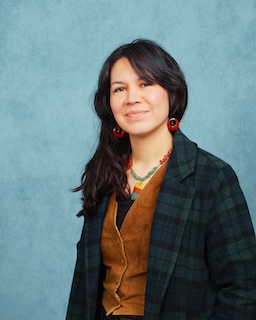
I’m the proud daughter of a Mexican immigrant whose name means comfort and a religious pluralist, peace-and-justice pastor. I was named after a sibling who briefly lived and am inspired by my bisabuela who was a local healer in her community. I’m a biracial, Spanglish-speaking, flora and fauna-loving, Midwesterner from the working class, therapist, social worker, grief tender, and owner of La Cigarra Counseling. I’m also someone who has navigated my own mental and emotional struggles. It is a genuine privilege to accompany others as they navigate theirs.
I provide liberation-oriented, relational, person-centered therapy to teens and adults of all identities and backgrounds, as well as clinical supervision to students and emerging practitioners. For the past 15 years, I have been dedicated to community care and emotional witnessing. I earned my Master of Social Work (MSW) from the University of Illinois Chicago in 2016, followed by a Master of Public Health (MPH) in 2017. I became a Licensed Clinical Social Worker (LCSW) in Illinois in 2021 and earned my Certified Thanatologist (CT) credential through the Association for Death Education and Counseling in 2025. Also, in 2025, I began training as a narrative therapist. I’m interested in the stories we find ourselves beholden to—the ones we’ve forgotten, the ones we’ve inherited without question, and the narratives we have yet to discover.
Life inevitably presents us with many challenges that shape our relationships, our sense of self, and the ways we move through the world. People seek therapy for many different reasons, but one of the most common reasons people find their way to my practice is grief.
Grief is an unavoidable and often daunting part of being human. We encounter it many times throughout our lives because life itself is full of transitions, losses, and growth. Yet few of us are prepared for the ways grief can affect our bodies, spirits, relationships, and sense of identity. It can alter how we understand ourselves and how we imagine the future. While not everyone experiencing grief needs therapy, for those who are open to it, counseling can offer a compassionate, nonjudgmental space to process difficult experiences, make meaning of loss, and remain connected to the people, values, and ways of living that matter most.
In addition to grief, I commonly walk alongside people navigating:
-
Anxiety, chronic stress, & high sensitivity
-
Substance use
-
Depression & low self-esteem
-
Relationship difficulties of all kinds
-
Identity exploration related to biracial and multicultural experiences, class, spirituality, gender and sexual diversity, neurodivergence, and giftedness
-
Caregiver fatigue, moral injury, and burnout
-
Experiences of discrimination and marginalization
My approach is informal, eclectic, and intersectional. I am guided by principles of autonomy, choice, and inclusivity across bodies, abilities, identities, presentations, and neurotypes. My role is not to tell you who to be or how to live. I aim to serve as a supportive and transparent collaborator as you integrate your experiences into something more meaningful and manageable. I also believe there is room for humor in therapy. We don’t have to leave our joy, playfulness, or wonderfully quirky parts at the door; they are most welcome in the space we create together.
Whether you’re navigating loss or simply trying to find your footing, therapy can be a place to slow down, make sense of your experiences, and move toward a life that feels more connected and affirming.
Iliana Espinosa-Ravi | La Cigarra Counseling